
CIRCULAR THINKING
DESIGNING FOR MAXIMUM MATERIAL SEPARATION
ISSUE 02
P25 Corporate HQ - Project Highlight
5th December 2025
During the 2022–23 financial year, Australia generated an estimated 75.6 million tonnes of waste, with the building and demolition sector responsible for 35% of that total. These figures highlight the growing need for designers to prioritise Design for Disassembly (DfD), an approach that not only reduces waste but strengthens the circularity of materials across a project’s life cycle.
Today, more products and materials are manufactured with recyclability and reuse in mind. However, their circular potential can only be realised when designers, project teams and backing from clients ensure that the fit-out itself does not disrupt this cycle. Good materials can only remain circular if the systems around them support separation, reuse and clean end-of-life recovery.

Receiving the building as a cold shell was a unique opportunity that allowed for the light insertion of functional elements to be placed with minimal impact to the building fabric.
A raised floor system rests upon existing floor finishes, eliminating the need for unnecessary demolition whilst providing the space for services to flow discreetly beneath. A layered approach to the raised floor elevates the working neighbourhoods at the highest point that double as plenums for mechanical ducts. These integrated plenums deliver air into each zone, while plinths act as both visual thresholds and functional seals that contain the airflow.
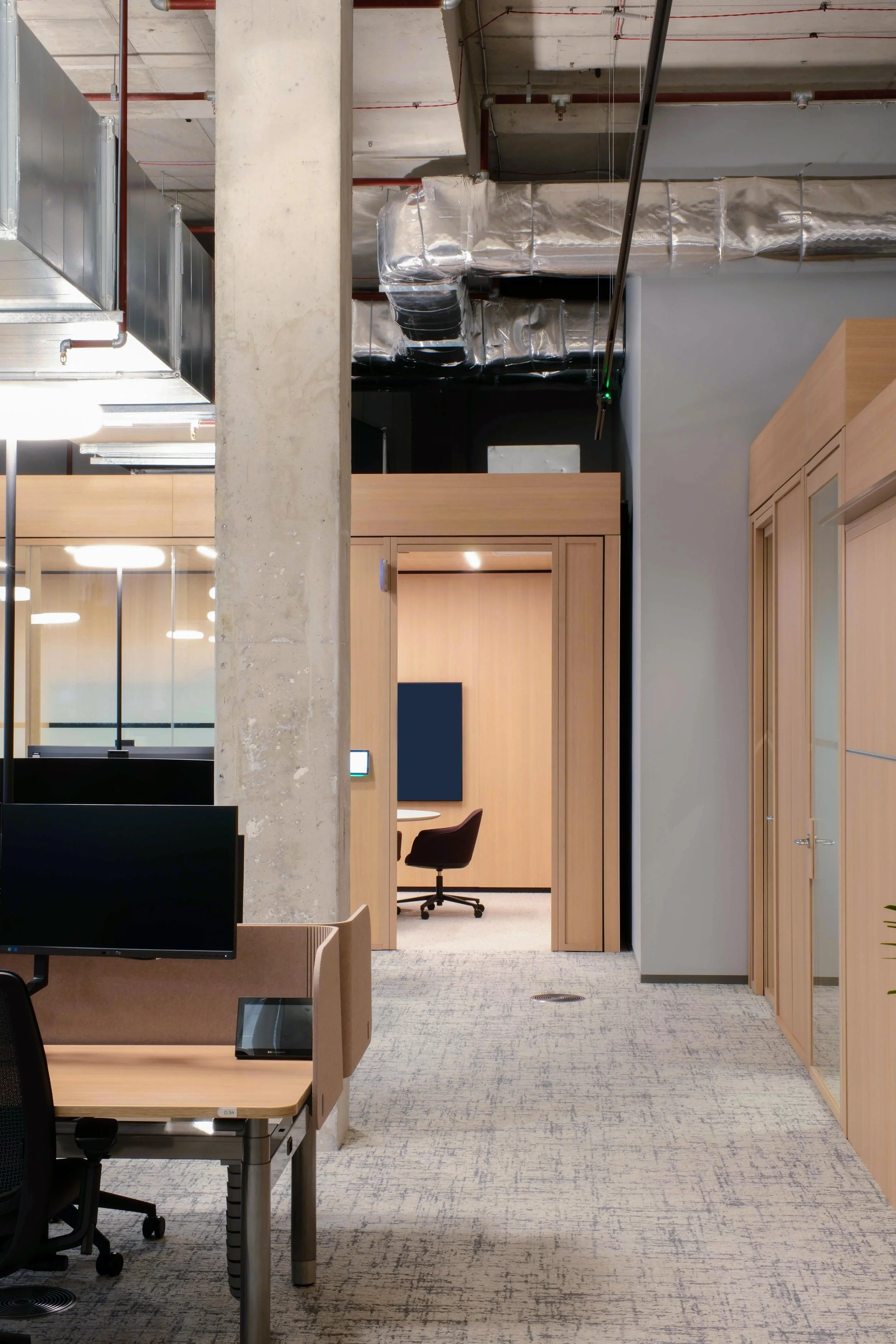
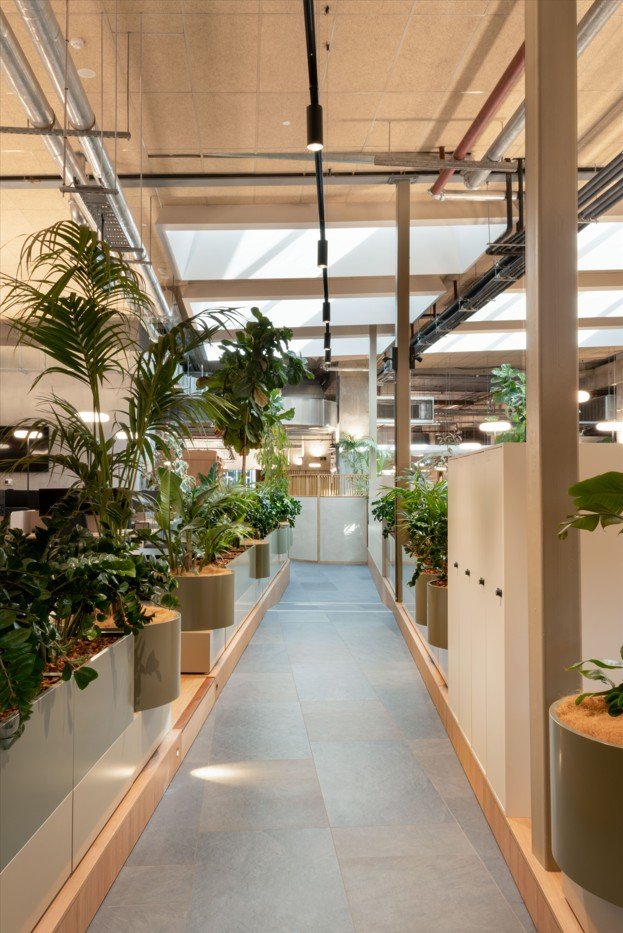
Along the internal ‘streets’, modular elements - lockers, storage units, and planters - serve dual purposes. Visually, they provide a soft barrier between each neighbourhood; functionally, they can be shifted and reorganised as business needs evolve. This modularity ensures that the workplace remains dynamic, efficient, and always ready to transform.
The P25 project embraced this responsibility from the outset. The team recognised that the workplace might be partially deconstructed by the landlord at the end of the lease and responded by designing with future disassembly in mind. Their approach balanced durability and longevity with the need for materials to be easily separated and recovered long after the project’s initial completion.
The project eliminated the need for approximately 1.5 tonnes of adhesive by using mechanical fixings throughout the joinery, built form and acoustic treatments. This decision not only improves indoor air quality but also ensures a cleaner, toxin-free disassembly process, allowing materials to be reclaimed without contamination.
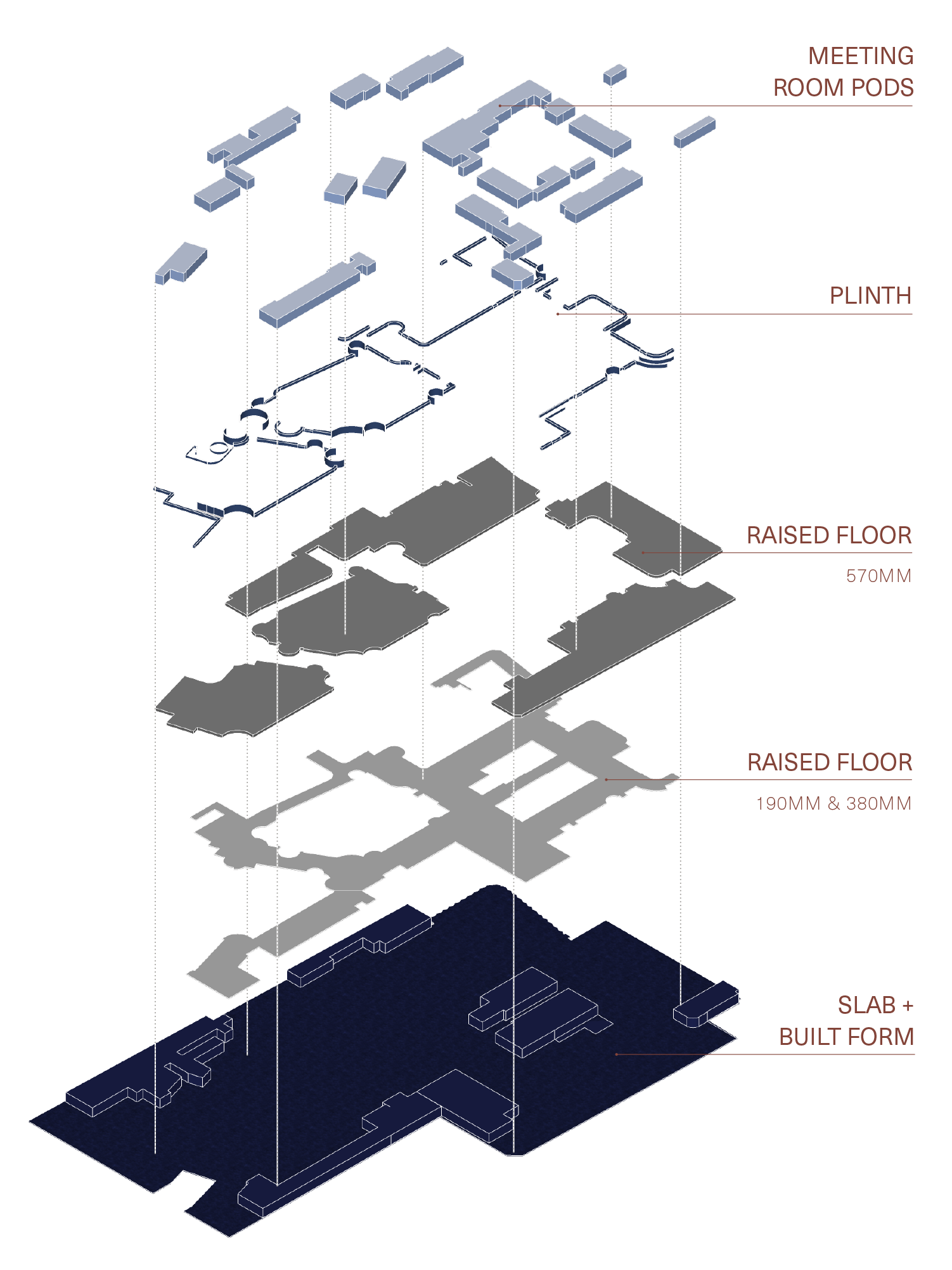
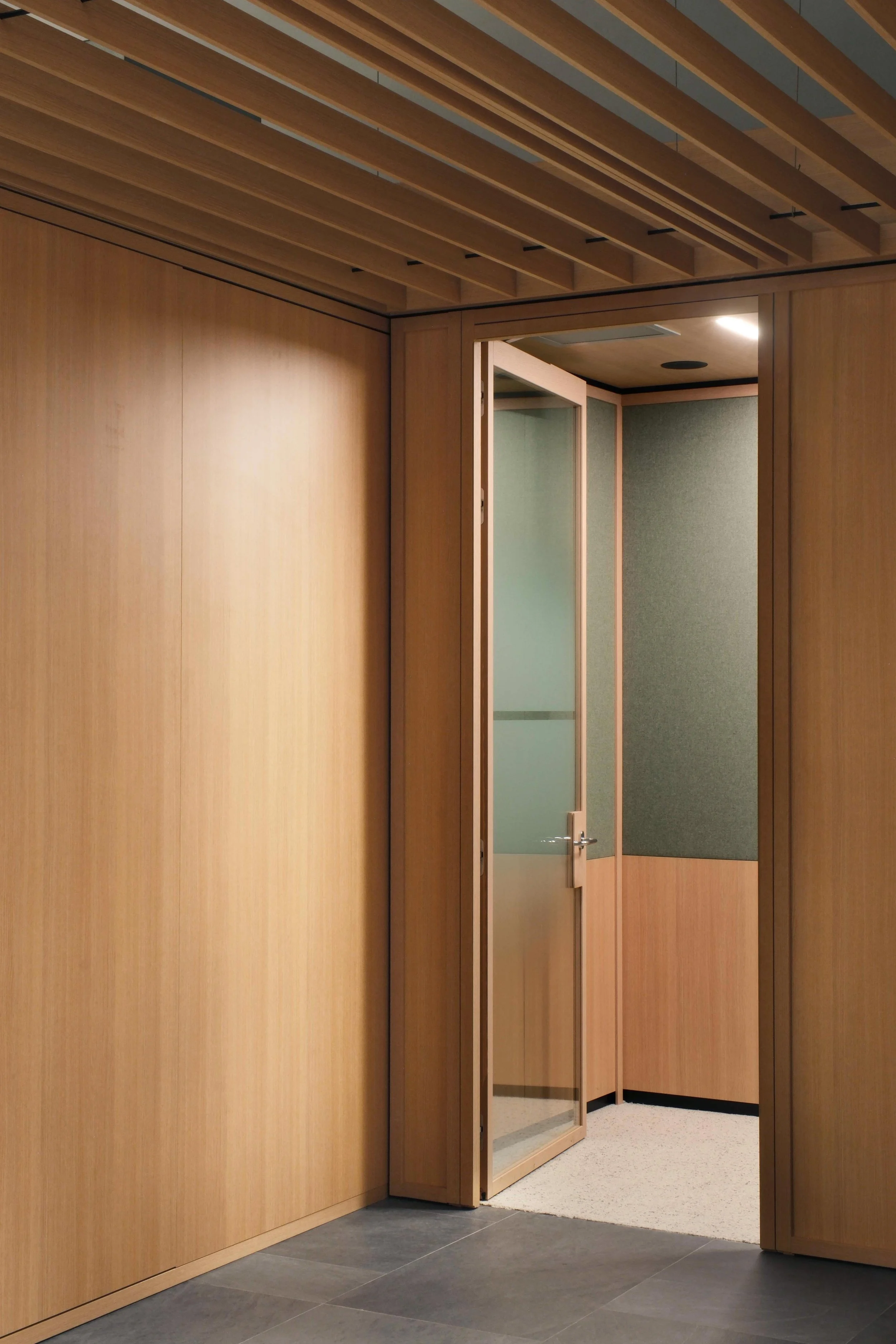
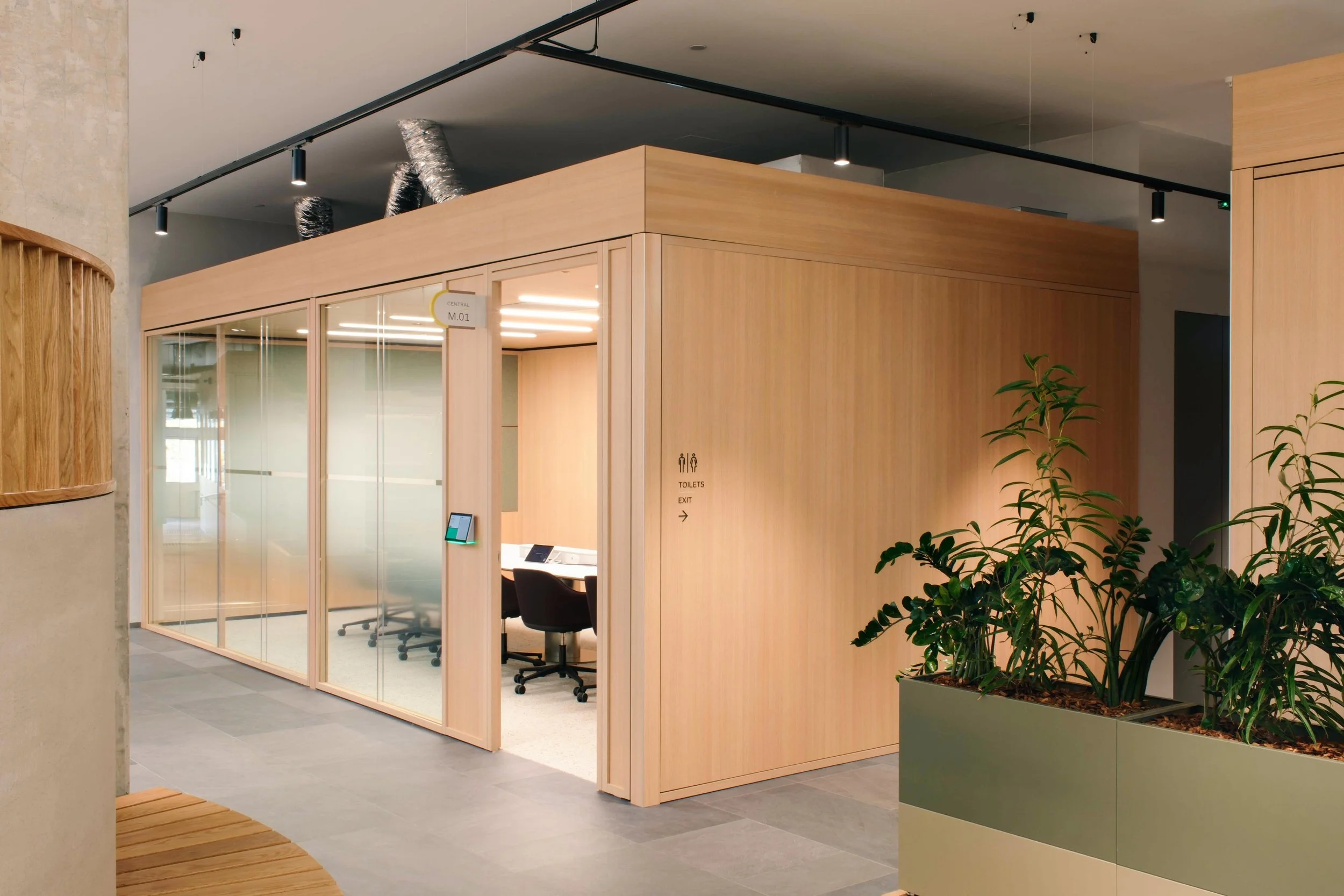
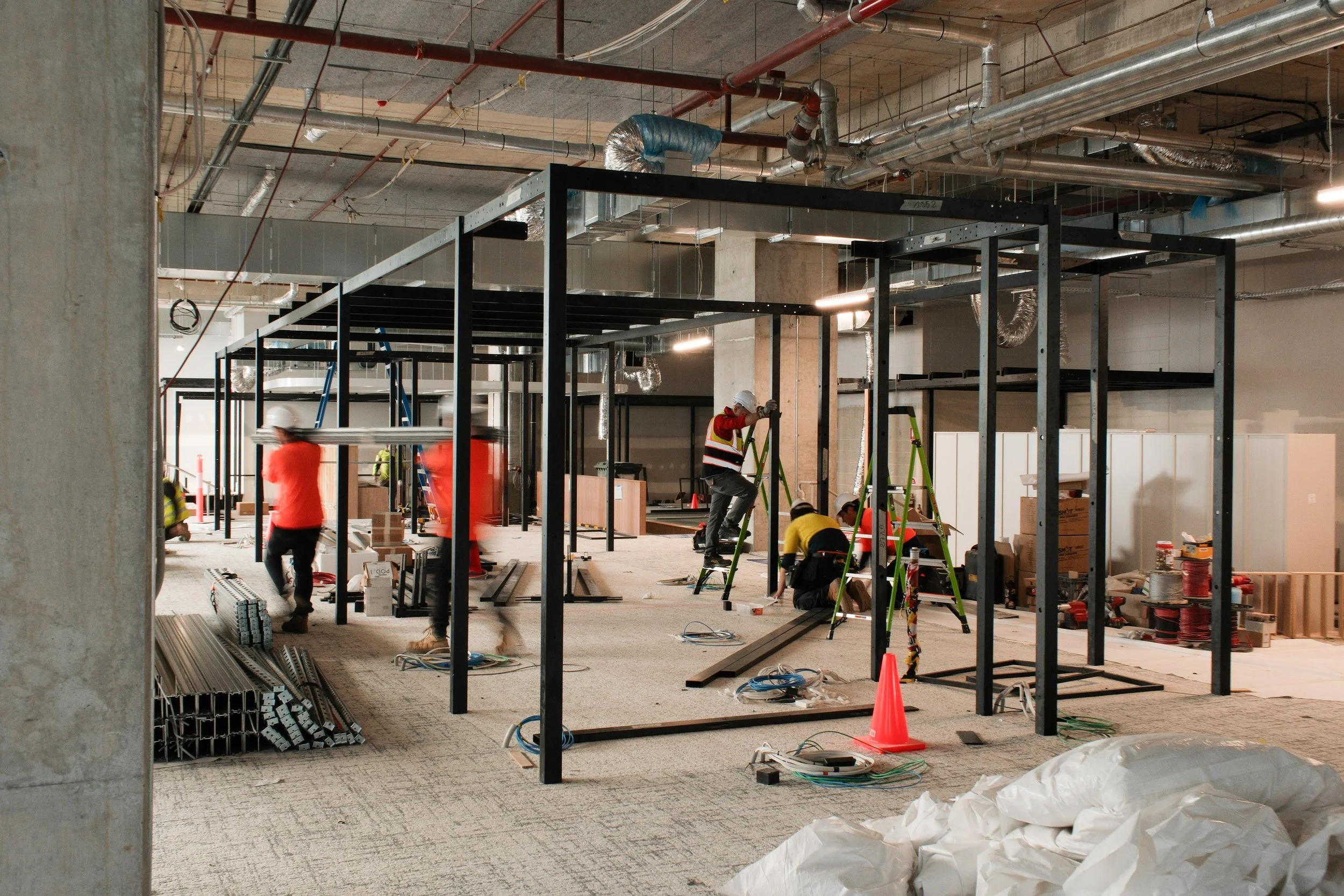
Generous ceiling heights set the stage for prefabricated modular pods to be inserted as a strong visual counterpoint while restoring a sense of human scale to an otherwise expansive floorplate. Composed as a series of volumes, the meeting, focus and phone pods manufactured by Unifor and Citterio are fully demountable, with the ability to reassemble or recycle all components.
The Pods underwent a rigorous prototyping process to meet the brief and requirements of the client and consultant team. Services are seamlessly integrated into the design to create high-performing, easily accessible and functional rooms.
The pods offered a cost-neutral alternative to traditional built forms in the context of the architecture. Their construction comprises an aluminium structural system paired with timber and fabric-wrapped panels, along with timber-framed fenestrations and glazing installed without silicone joints. All framing, panels, and fenestrations are mechanically fixed, providing an efficient, non-destructive disassembly. Every material that forms each pods was sourced within a 50km radius of the manufacturer, dramatically reducing transport emissions and contributing to an exceptionally low carbon footprint.
The result is a series of thoughtfully crafted spaces that embrace honest simplicity and fine detailing. The pods enhance both the functionality and character of the workplace while maintaining a flexible, sustainable, and future-proof design vision.
Photographs: Lisa Henley